Grinding Brake Sounds: Why You Should Take Them Seriously
When you hear brakes grinding sound, it means your car is sending an urgent alert.
Brakes aren’t just another car part, but your most critical safety device. A grinding noise typically means metal is contacting metal somewhere in the system, which drastically reduces braking performance.
Even if the noise seems minor at first, it can worsen with time. What starts as a small issue can damage rotors, callipers or other parts, and add to the repair bills and risk. Early action can give you cheaper repairs and safer driving.
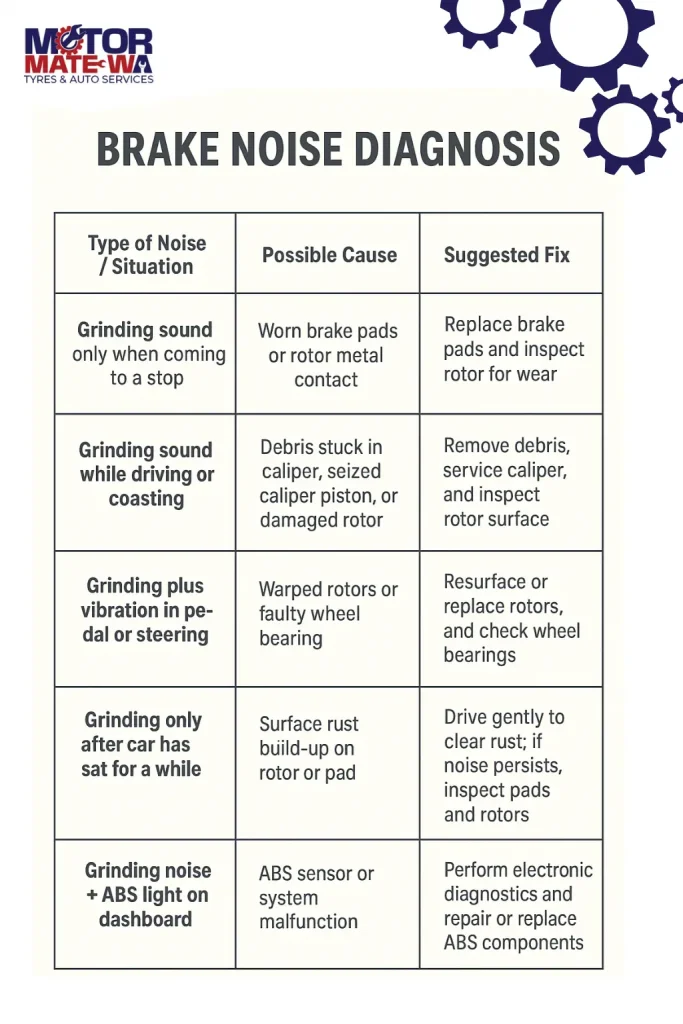
Brakes Grinding While Driving
If you hear a grinding sound when braking while you’re still moving (not only when you press the brakes), it means an obstruction is there. For example:
- A small stone or debris stuck between pad and rotor can cause grinding even before you hit the brake.
- A stuck or seized brake calliper can cause metal-on-metal contact even when you’re not braking heavily.
This kind of grinding while driving isn’t something to wait out. It signals there’s abnormal contact in your brake system.
Brakes Grinding When Stopping
When your brakes start grinding right as you slow or stop, the warning signs get even stronger. The most common culprit here? Over-worn brake pads. When the friction material is gone, the metal backing plate touches the rotor and grinding occurs.
You’ll also experience:
- Vibrations through the pedal
- Car pulling to one side
- Increased stopping distance
All of these suggest your brakes problems are advanced and need prompt attention.
8 Reasons Behind Your Brakes Grinding Sound
Following are some reasons behind grinding noise when braking. If you understand them, you can easily arrange the required solution.
-
Worn-Out Brake Pads
The most common cause: your brake pads have worn away. When pads get too thin, the metal support plate starts to rub the rotor directly. Metal-on-metal contact produces the harsh grinding sound when brakes are pressed.
Simply replace the pads stops the damage. If you ignore it, it can also damage rotors and increase the repair cost.
-
Damaged Brake Rotor
Rotors can become irregular through wear, heat, rust or debris. A warped, grooved or pitted rotor surface means the pad won’t make even contact, leading to grinding and vibrations. In severe cases, the rotor itself begins making the noise.
Fixing it requires resurfacing or replacing the rotor depending on how bad the damage is.
-
Faulty Wheel Bearing
It’s not always the problem in brakes. A worn wheel bearing can mimic or cause a brake bearing noise that sounds like grinding during braking. You’ll also feel vibrations or hear the sound while turning.
Because wheel bearings are part of the wheel hub assembly, check them if the noise persists even after brake repair.
-
Lack of Lubrication / Brake Hardware Issues
Brake systems have sliders, pins, clips and other hardware that allow smooth movement. If they are corroded, dry or damaged, the friction increases. As a result, you’ll hear grinding or dragging sounds.
Brake service should include checking and lubrication of these parts to prevent grinding.
-
Debris in the Brake Calliper or Rotor
Sometimes the noise is caused by a foreign object. It can be a stone, rust flake or dirt that’s stuck between rotor and pad or inside the calliper. These objects will cause an intermittent scraping noise when braking.
It is simpler to fix than major component failure, but should still be addressed quickly.
-
ABS / Brake System Electronic Issues
A fault with the ABS or other braking system components can cause odd grinding or buzzing sound. It will be especially noticeable when you apply heavier braking. Arrange diagnostics for this problem and check ABS warning light too.
-
Jammed Brake from Inactivity
If your car sits for long periods, especially in damp conditions, rust will build up on rotors or pads. So, whenever you drive again, you will hear grinding until it clears. It is a temporary concern, but if it persists, further inspection is required.
-
Metallic Brake Pads / Low-Quality Pads
Some pads, particularly low cost or budget metallic-type ones, have hard metal fragments inside. Some people even intentionally install metallic pads for high-performance vehicles. They can cause grinding sounds even though pads have material left.
Changing the brake pads to organic or ceramic can solve the problem.
Brakes Are Grinding: How Long Do I Have?
So, you hear grinding, what now? The answer: you don’t have much time. A brake system causing a grinding noise is in severely compromised condition. The longer you drive like that, the worse the damage.
In many cases, once you hear metal on metal, the rotor is scored or damaged beyond easy repair. Stopping distance goes up, brake feel is poor, and safety is reduced.
If you’re in this situation: slow down your driving, avoid hard braking, and book a brakes repair near Perth as soon as possible. Every kilometre you keep going risks more damage and higher repair bills.
Can Grinding Brakes Damage Other Parts?
Yes. What starts with worn pads or debris can extend into serious damage if ignored. Here are some scenarios that can cost you big.
- Damaged rotor surfaces cause uneven braking, heat build-up and possible warping.
- A seized calliper causes excessive pad wear, rotor damage, or even brake fluid issues.
- A bad wheel bearing will not just affect braking, but also wheel hub alignment, tyre wear and overall vehicle control.
In short: grinding causes extra wear and tear in braking system and wheel assembly. But the good news is, if you act early, you’ll reduce repair costs and maintain your safety. So, don’t wait for the worst. If you hear grinding, contact the experts for a proper check.
DIY or Professional Help: What Do I Do If My Brakes are Grinding?
So, can you tackle this yourself, or hand it over to a pro? The answer is, it depends.
Some simple issues (like debris or rust after sitting) you can clear yourself. But persistent grinding means something’s beyond simple fixes. So, it can’t be solved without professional help and proper diagnostics.
Because the brake system is vital for safety, and components like callipers, rotors, bearings are expensive or risky to mess up. We always recommend to take your vehicle to a qualified brakes specialist in Perth. Otherwise, you’ll worsen the problem.
At Motor Mate WA, our experienced mechanics use advanced diagnostics and follow industry-best practices to get you back on the road safely.
Need Help with Grinding Brakes?
Get Expert Brake Repair at Motor Mate WA
If you’re hearing that scraping noise when braking, don’t put it off.
Our experienced braking specialists can diagnose and fix the problem in seconds. From worn pads and warped rotors to brake bearing noise, you can get any braking issue sorted out. We use high-quality parts, advanced tools for accurate diagnosis.
Plus, you can enjoy peace of mind with our transparent pricing & Australia-wide guarantees.
Drive in safe & confident.
Book Your Brake Inspection & Repair with Us Today
FAQs
What causes my brakes to grind?
Most often, worn pads, damaged rotors, debris, stuck callipers, or faulty wheel bearings cause that metal-on-metal sound.
Can grinding brakes damage my car?
Yes. Ignoring grinding can warp rotors, damage callipers, and even affect wheel alignment and tyre wear.
Is it safe to drive with grinding brakes?
Not for long. Persistent grinding reduces braking performance and increases stopping distance. Get them checked immediately.
Can I fix grinding brakes myself?
Only for temporary debris or rust. Persistent grinding requires professional inspection and repair.
How quickly should I repair grinding brakes?
As soon as possible. Every kilometre with grinding brakes risks further damage and higher repair costs.