Bull Bar for Your 4WD: Do You Really Need One?
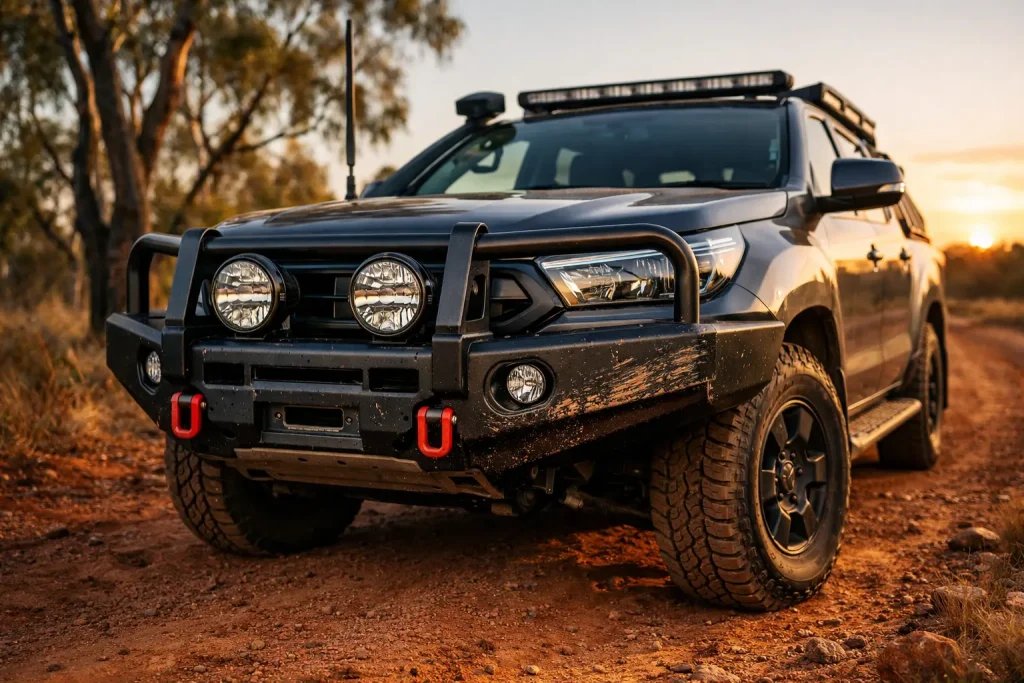
If you drive outside Perth, venture into regional WA, or hit off-road tracks, your 4WD faces real risks like kangaroo strikes, livestock, and rough terrain. That’s where a bull bar comes in. More than just a rugged look, it protects your vehicle, provides secure mounts for lights and winches, and keeps you moving safely.
In this guide, we’ll cover what a bull bar is, its benefits and drawbacks, material options, and practical tips. Read on to discover if your 4WD truly needs one and how to choose the right bar for your next adventure.
Table of Contents
What is a Bull Bar?
A bull bar is a heavy-duty frontal guard fitted to the front of a vehicle; most commonly 4WDs, Utes and SUVs, to protect its critical components (radiator, headlights, bumper, and engine bay) from impacts like animal strikes or off-road obstacles.
In Australia you’ll also hear them called roo bars, nudge bars, grille guards or brush guards; “bull bar” and “roo bar” are the most common terms.
Bull bars come in different styles and sizes:
- Nudge bars: Small, lightweight, mainly for city or suburban use.
- Single or triple hoop bars: Heavy-duty protection for off-road use.
- HDPE/polymer bars: Flexible, lighter, and safer for modern cars with sensors.
Which style you see on the street depends on your vehicle, driving needs and local laws.
How Bull Bars Work?
Bull bars protect your vehicle by absorbing or deflecting impacts before they reach critical components. Most bars bolt to reinforced chassis points or are welded for extra strength. Modular designs come in pieces that can be replaced if damaged. Proper fitment ensures safety systems like airbags and sensors still work correctly.
Beyond protection, many bull bars come with pre-drilled mounting points for accessories like lights, antennas, winches, and recovery gear. Integrated wiring channels and carefully positioned mounts also safeguard your vehicle’s electronics and sensors.
Understanding how bull bars work is the first step—next, let’s explore why your 4WD might actually need one.
Why Your 4WD Needs a Bull Bar?
Kangaroos and other wildlife cause a large share of animal-vehicle collisions in rural and regional Australia, so bull bars are essential for country and outback driving. If you do a lot of dawn/dusk country driving or remote work, a properly designed bull bar is considered essential.
Bull bars also protect, support accessories and increase capability, but they’re not a one-size-fits-all upgrade. Here’s what they actually do and why you need one.
Key Benefits of Installing a Bull Bar on Your 4WD
A compliant bull bar protects your vehicle from animal strikes and off-road hazards, gives you secure places to mount recovery gear and lights, improves approach angles for rough tracks, and adds durability and resale value when fitted professionally.
➤ Protection Against Animal Strikes and Collisions
Australia has one of the highest rates of animal-vehicle collisions in the world. Kangaroos, wallabies, and even livestock are major hazards, particularly at dawn and dusk on rural roads around Perth and regional WA.
A well-designed, ADR-compliant bull bar acts as a first line of defence, protecting vital components like:
- Radiator and cooling systems
- Headlights and grille
- Air conditioning condensers and intercoolers
- Engine bay and front bumper systems
In some cases, a properly fitted bull bar can prevent a total write-off after an animal strike. If your WA travels often take you to rural areas, this alone can justify the investment.
➤ Secure Mounting Points for Accessories
One of the biggest advantages of a bull bar is its ability to serve as a stable base for accessories. This is especially important for off-road adventures, remote work, or rural night driving. Common mounts include:
- LED spotlights or light bars for improved visibility
- UHF antennas for communication in remote areas
- Winches and recovery points for off-road recovery
- Sand flags for dune driving
- Other accessories like aerials for mining or farm work
By integrating your gear onto a bull bar, your 4WD setup becomes safer, more functional, and ready for any adventure.
➤ Improved Approach Angles for Off-Road Driving
Factory bumpers often limit a vehicle’s approach angle, increasing the risk of scraping or damage on steep tracks, rocky terrain, or washouts.
A bull bar improves front-end clearance, especially steel, winch-compatible bars designed for serious off-road use. For WA weekend warriors exploring places like the Blue Mountains, Stockton Beach, or Pilbara tracks, this benefit is essential to avoid expensive front-end damage.
➤ Protection for Pedestrians and Wildlife
Modern, ADR-compliant bull bars are designed to reduce pedestrian risk, while also protecting wildlife. A properly fitted bar spreads collision force across a larger surface area, reducing impact severity.
This can prevent serious accidents, potentially saving lives; human or animal, in areas like WA’s wildlife-heavy rural roads.
➤ Strength and Durability in Harsh Conditions
Utes and 4WDs in WA face rough off-road conditions whether for work, recreation, or remote adventures. A high-quality bull bar adds extra strength to withstand:
- Bush tracks
- Rocky trails
- Muddy terrain
- Fallen branches or debris
This rugged construction ensures your 4WD keeps moving even when the environment is tough.
➤ Extends Vehicle Life
A bull bar specifically protects the components that keep your 4WD running. This way it contributes to the vehicle’ longevity. Even after minor impacts, these systems continue functioning, keeping your vehicle operational and reducing expensive repairs.
Considerations Before Installing a Bull Bar
While bull bars provide huge benefits, there are key factors WA drivers should consider before fitting one.
➤ Weight and Fuel Consumption
Heavy-duty steel bull bars can add 40–60 kg to the front of your vehicle. This extra weight can:
- Slightly increase fuel consumption
- Put extra strain on suspension
- Affect payload or GVM if your vehicle is near capacity
Alloy or HDPE/polymer bars reduce weight but may offer slightly less impact resistance. Always consider accessory weight like winches and lights when calculating total load.
➤ Installation Cost
Quality bull bars vary from $1,000 to $3,000+, depending on material, brand, and vehicle model. Installation, accessories, and sensor recalibration add to the total.
Plan your build, prioritise essential protection and accessories, and spread costs over time for a budget-friendly setup.
➤ Compatibility with Airbags and Vehicle Sensors
Modern 4WDs are equipped with advanced tech like parking sensors, radar cruise, cameras, and AEB (autonomous emergency braking). Fitting the wrong bull bar or installing it incorrectly can interfere with these systems. Always choose:
- ADR/AS-compliant bull bars
- Vehicle-specific designs tested for sensor and airbag compatibility
- Professional installation to maintain safety systems
➤ Legal Compliance (WA & National Standards)
Australian states have specific rules for frontal protection devices. In WA and other states, your bull bar must:
- Not block headlights, indicators, or number plates
- Be airbag-compatible
- Have no sharp edges or dangerous protrusions
- Comply with Australian Design Rules (ADR)
Fitting a legal, roadworthy bull bar is essential for insurance, safety, and avoiding fines.
Bull Bar Materials: Choosing the Right One for Your 4WD
Choosing the right bull bar material affects protection, weight, durability, and compatibility with accessories like winches or lights. Here’s a simple guide for WA drivers.
1- Steel Bull Bars
Steel is the toughest material, ideal for heavy off-road use and rural WA driving where animal strikes or bush tracks are common. It’s heavier than aluminium (40–60 kg or more), which may affect fuel economy, suspension wear, and handling. Can dent under impact but often repairable; withstands rocks, branches, and off-road obstacles.
Best for: Drivers needing heavy-duty protection or a winch mount for work and remote adventures.
1- Aluminium Bull Bars
Aluminium is up to 30% lighter than steel, reducing strain on suspension and improving fuel efficiency. It’s naturally rust-resistant which is great for coastal Perth drivers. Usually requires a steel cradle for safe winch mounting.
Best for: Those who want strong protection with less weight for towing, daily driving, or mixed off-road use.
3- HDPE / Polymer Bull Bars
HDPE flexes to reduce shock to the vehicle; protects sensors and airbag systems. It’s lightweight, having minimal effect on fuel or suspension.
Best for: Modern 4WDs with safety sensors, city + occasional off-road driving.
Quick Comparison at a Glance
|
Material |
Protection |
Weight |
Corrosion Resistance |
Winch Mount |
Best Use |
|
Steel |
Excellent |
Heavy |
Needs coating |
Strong |
Off-road, rural WA, winch use |
|
Aluminium |
Very good |
Light |
Natural resistance |
Requires steel cradle |
Mixed driving, coastal, towing |
|
HDPE |
Moderate |
Very light |
Excellent |
Limited |
City/modern vehicles, sensor-friendly |
Professional Bull Bar Installation for Your 4WD in Morley
Choosing the right bull bar is only half the job. Proper installation is what truly protects your 4WD. At Motor Mate in Morley, we supply and professionally fit ADR-compliant bull bars designed to work seamlessly with your vehicle’s airbags, sensors, and safety systems. Whether you’re preparing for rural WA driving, off-road adventures, or added front-end protection against animal strikes, our experienced technicians ensure correct fitment, weight balance, and accessory integration (lights, winches, antennas). Book your bull bar installation with us and drive with confidence knowing your 4WD is ready for whatever Western Australia throws at it.
Conclusion: Do You Really Need a Bull Bar for Your 4WD?
For 4WD drivers, a bull bar is a practical safety upgrade. It protects your vehicle from kangaroo strikes, livestock, and off-road hazards while shielding vital components like radiators, headlights, and intercoolers. Plus, it provides secure mounting points for lights, winches, and recovery gear, keeping you prepared for any adventure.
Choosing the right material—steel for heavy-duty protection, aluminium for reduced weight and corrosion resistance, or HDPE/polymer for sensor-friendly flexibility—helps keep your 4WD safe and functional without compromising performance. If you frequently drive outside metropolitan areas, a professionally fitted, ADR-compliant bull bar is a smart investment for peace of mind, enhanced off-road capability, and long-term vehicle protection. Get a quote today to find the right bull bar for your 4WD and drive with confidence wherever the road or track takes you.
FAQs
Do bull bars affect airbags or vehicle sensors?
Yes, poorly chosen or incorrectly fitted bull bars can interfere with crash sensors and airbag timing, and may affect radar/camera-based systems. Always use vehicle-specific, ADR/airbag-compatible bull bars and get professional fitment and sensor checks to keep safety systems working correctly.
Are bull bars legal in Western Australia?
Yes, but only if they comply with Australian Design Rules and WA guidance: they must not obstruct lights/number plates, must avoid dangerous projections, and be airbag compatible. Check product labelling and use a professional fitter to ensure your bar meets WA requirements.
What’s better: steel or aluminium bull bar?
Steel bull bar gives the strongest protection and is best for heavy off-road or winch use. Aluminium bull bar is much lighter and resists corrosion. Choose steel if you need maximum brute strength; choose aluminium if you want a lighter bar that’s kinder to fuel, suspension and GVM, and always confirm winch mounting design.
How much does a bull bar cost in Perth?
Typical bull bar prices in Perth range from about $1,500 to $3,500 AUD for the bar alone; branded or specialised bars and heavy-duty winch setups can exceed $4,500. Add professional fitment, sensor work and accessories (lights, winch) to your total cost.
How much weight does a bull bar add to your 4WD?
Weights vary widely by material and design. Average bars commonly add 20–40 kg, while heavy steel, winch-capable bars can add 50–100 kg or more. Factor in accessories (winch, lights) and check GVM/suspension implications before fitting.
Will fitting a bull bar affect my insurance?
It can insurers often expect fitted safety accessories to be legal and professionally installed; non-compliant or badly fitted bars could complicate claims. Always inform your insurer before fitting and keep compliance paperwork and installer details on hand.