
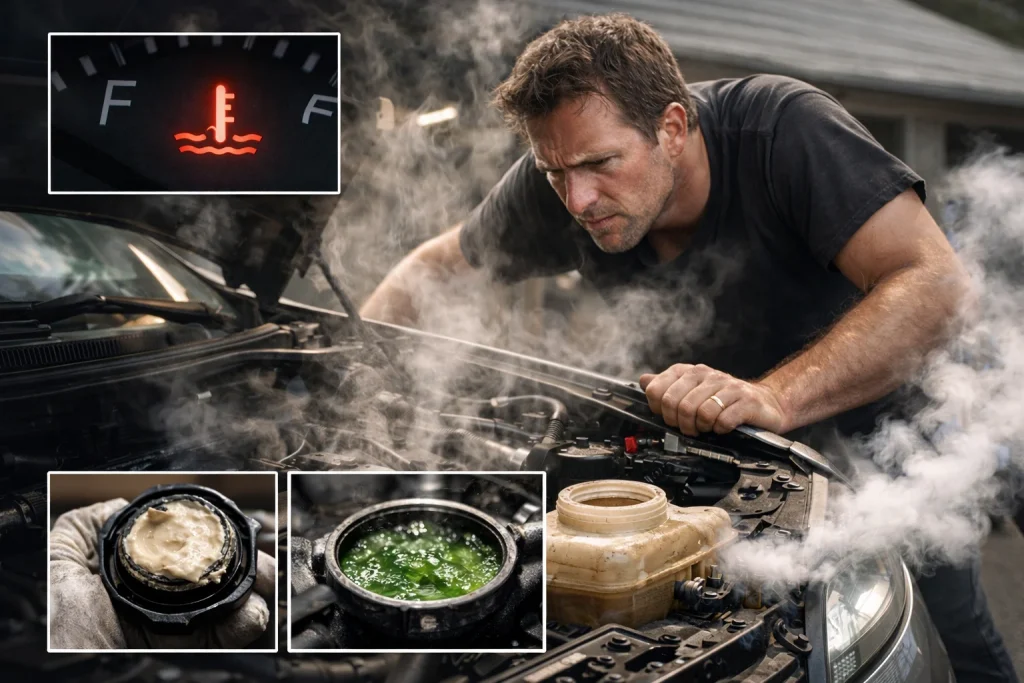
Top 7 Signs of a Blown Head Gasket
Keeping up with routine oil and coolant changes helps protect your head gasket, but even well-maintained cars can develop gasket problems. If you notice a head gasket failure, check the following seven warning signs carefully to spot the issue early.
1- White or Grey Smoke from the Tailpipe
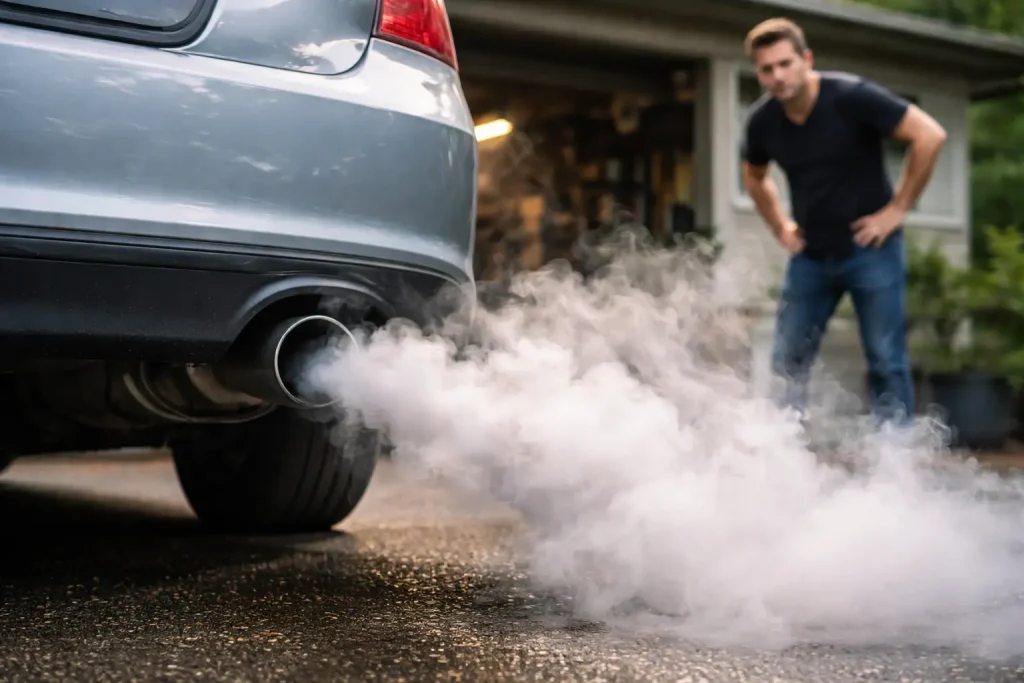
A blown head gasket can allow coolant to enter the combustion chamber. When coolant is burned with fuel it produces thick white or light-grey smoke, often with a slightly sweet smell. This smoke is different from normal condensation vapour that appears briefly on cold starts. Head-gasket smoke continues once the engine is warm.
Symptoms to look for:
- Thick white/grey smoke from the tailpipe while driving (not just on cold start)
- Smoke that persists after the engine reaches operating temperature
- A sweet or coolant-like smell from the exhaust
2- Rough Idle or Poor Engine Performance
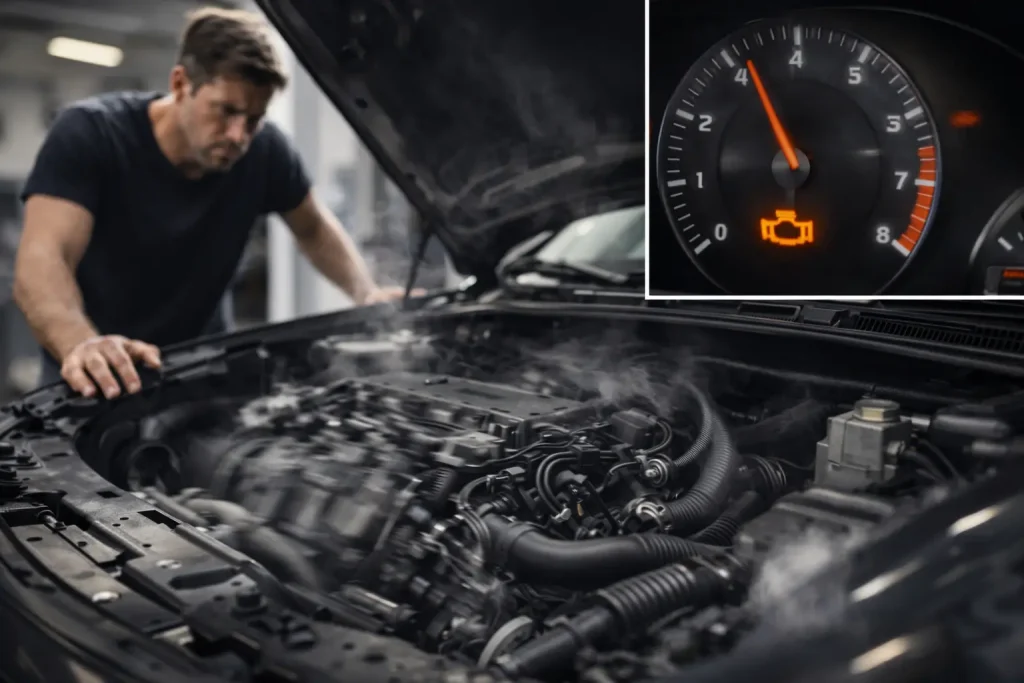
If the head gasket fails between two cylinders, compression can leak from one cylinder to another. Engines require consistent compression to run smoothly; when compression is lost the engine may idle roughly, misfire, or feel underpowered.
Symptoms to look for:
- Uneven or shaking idle at stops
- Stumbling, hesitation or misfires during acceleration
- Noticeable drop in power or poor throttle response, especially at low revs
3- Milky, Frothy or Discoloured Oil (Oil Contamination)
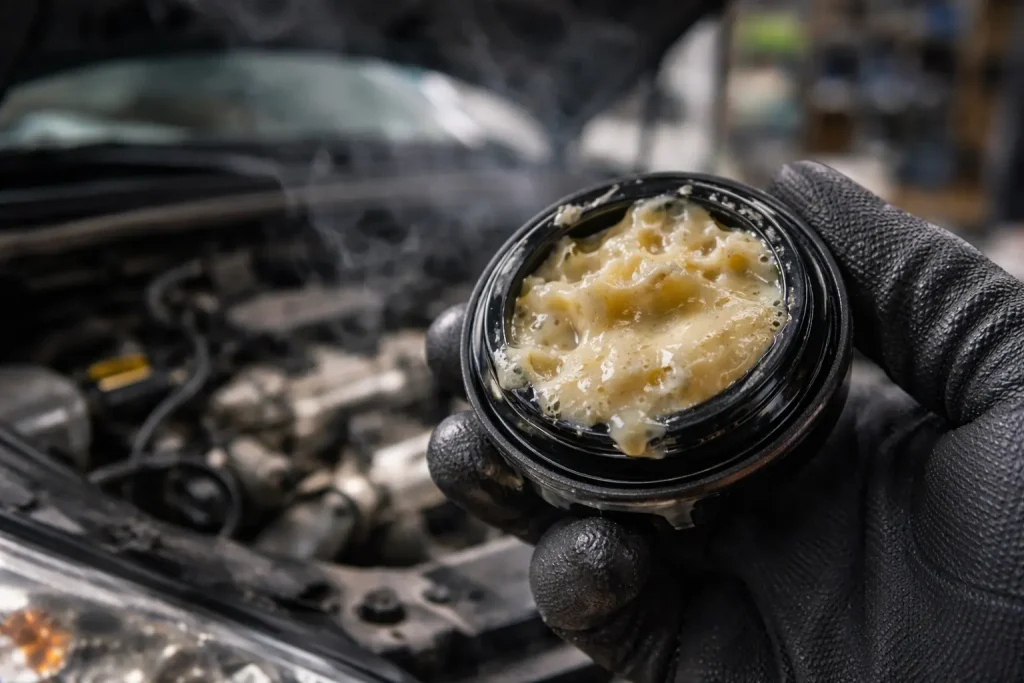
Coolant mixing with engine oil produces a milky, creamy residue. Check under the oil filler cap and on the dipstick: if you see a milkshake-like, brownish-yellow or frothy film, coolant has likely contaminated the oil. Contaminated oil loses its lubricating properties and can cause rapid internal wear.
Symptoms to look for:
- Milky, light-brown or creamy residue under the oil filler cap
- Frothy, cloudy or unusually high oil level on the dipstick
- Rapid engine wear symptoms after contamination appears
Safety note: If oil contamination is present, do not continue driving. Have the vehicle towed to a workshop to avoid catastrophic damage.
4- Persistent Engine Overheating
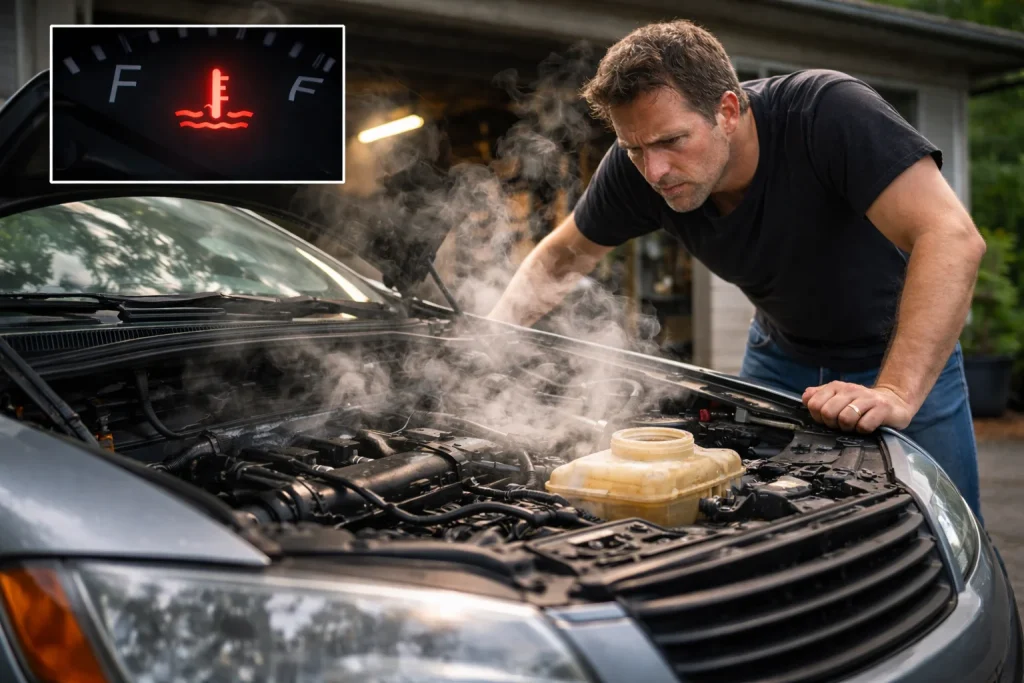
Overheating can both cause and result from head gasket failure. A leaking gasket may disrupt coolant flow or allow combustion gases into the cooling system, reducing cooling efficiency. Conversely, repeated overheating stresses the head gasket and can eventually warp the head or block, breaking the seal.
Symptoms to look for:
- Temperature gauge consistently running hotter than normal or spiking
- Repeated overheating events even after topping up coolant
- Steam from under the bonnet or persistent temperature warning lights
If your car overheats, stop driving safely and arrange a professional diagnostic. Motor Mate WA can perform cooling-system and head-gasket checks to determine the root cause and advise on repairs.
5- Bubbling or Gurgling in the Radiator / Coolant Reservoir
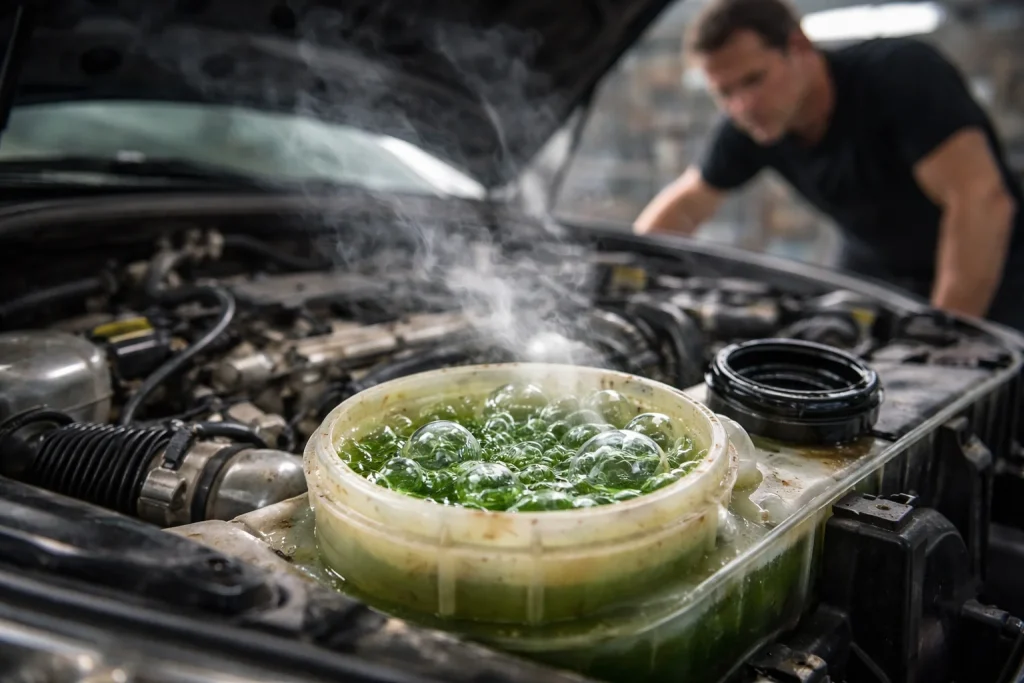
A failed head gasket can allow combustion gases into the cooling system, causing pressure spikes and visible bubbling or gurgling in the radiator or overflow tank. This symptom indicates combustion gases are entering places they shouldn’t.
Symptoms to look for:
- Continuous bubbling or foaming in the radiator with the engine running
- Overflow tank frequently full or spitting coolant
- Gurgling noises from the cooling system
6- Unexplained Coolant Loss with No External Leak
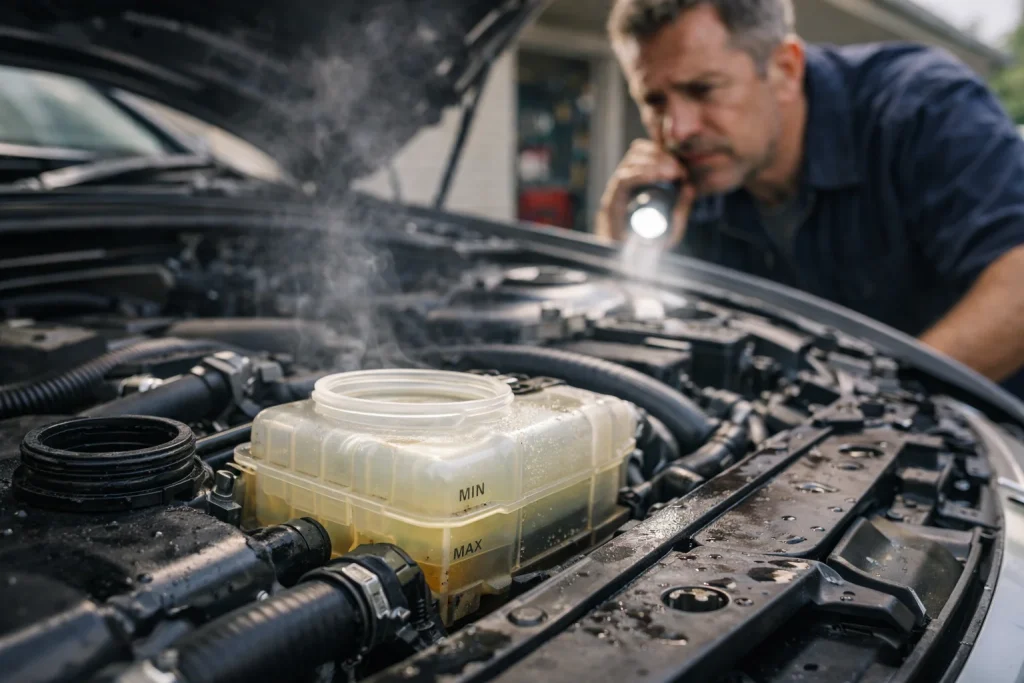
If you’re regularly topping up coolant but can’t find a leak under the car, coolant may be escaping internally through the head gasket and being burned in the combustion chamber or mixing with oil.
Symptoms to look for:
- Coolant level dropping regularly without visible puddles
- No obvious external leak on the driveway, yet frequent top-ups required
- Occasional white smoke from the exhaust or unexplained overheating
7- External Oil or Coolant Leaks Around the Head
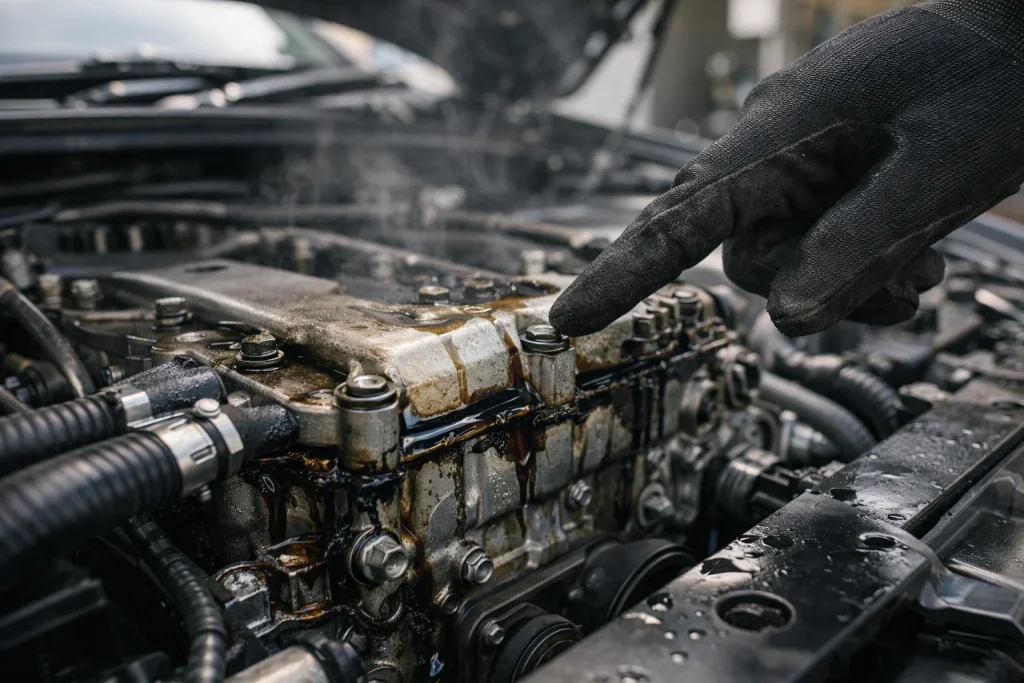
Sometimes a blown head gasket leads to external leaks where the cylinder head meets the engine block. While external leaks can be caused by other seals and gaskets, when combined with the other symptoms they strengthen the case for head gasket failure.
Symptoms to look for:
- Oil or coolant streaks along the side of the engine block or cylinder head
- Coolant pooling near the exhaust manifold or head gasket seam
- Burning smells as leaked fluids contact hot engine parts
What Causes Head Gasket Failure?
A head gasket fails when it is exposed to stress, heat, or pressure beyond its design limits. Common causes include engine overheating, high combustion pressures, poor installation, low-quality gaskets, age, and inadequate maintenance. Understanding these factors can help drivers prevent costly repairs and keep their vehicles running safely. Let’s dig deeper:
➔ Prolonged Engine Overheating
Excessive heat is the leading cause of head gasket failure. Overheating can warp or crack the cylinder head, breaking the gasket seal. In Perth’s hot climate, even short periods of high engine temperature can weaken the gasket.
Contributors include:
- Low or leaking coolant
- Faulty thermostat or water pump
- Blocked radiator or cooling passages
- Cooling fan or sensor malfunctions
Regular cooling system inspections are essential to avoid overheating-related gasket damage.
➔ Excessive Combustion Pressure
Abnormally high cylinder pressure stresses the gasket and can cause it to fail. This can result from:
- Pre-ignition or detonation (fuel ignites too early)
- Carbon buildup inside cylinders
- Incorrect ignition timing or wrong fuel grade
- Forced induction (turbocharged or supercharged engines)
Managing engine timing, fuel quality, and boost levels helps prevent pressure-related failures.
➔ Improper Installation or Bolt Torque
A gasket must be installed perfectly flat and tightened to manufacturer specifications. Incorrect installation or improperly torqued head bolts can prevent a proper seal, leading to premature failure.
Common mistakes include:
- Bolts not torqued in the correct sequence or to spec
- Reusing old or stretched head bolts
- Gasket installed unevenly or misaligned
Professional installation ensures the gasket seals correctly.
➔ Low-Quality or Incorrect Gasket Material
Not all gaskets withstand modern engine conditions. Cheap or incompatible materials degrade faster under heat and pressure, increasing the risk of failure. Multi-layer steel (MLS) gaskets provide better durability and reliability.
➔ Age and Wear
Even with proper maintenance, gaskets wear out over time. Repeated heat cycles and engine vibrations gradually reduce sealing effectiveness, particularly in high-mileage engines.
➔ Poor Engine Maintenance
Neglecting regular service accelerates gasket wear. Key maintenance lapses include:
- Skipping coolant changes or radiator flushes
- Using dirty or low engine oil
- Ignoring minor cooling system faults
Proper servicing reduces stress and heat buildup that can damage the gasket.
➔ Abnormal Operating Conditions
Less common factors can still compromise a gasket:
- Hot spots in engine design causing uneven heating
- Surface imperfections on the head or block
- Using an incorrect gasket during engine resurfacing
These conditions increase the risk of gasket failure, especially in older or modified engines.
What to Do If You Notice a Blown Head Gasket?
If you notice any warning signs of a blown head gasket, acting quickly can prevent catastrophic engine damage. Here’s a step-by-step guide to take immediate action.
1- Stop Driving Immediately
If your engine is overheating, producing white smoke, or showing other head-gasket warning signs, stop driving immediately. Continuing to drive can worsen internal damage and lead to costly repairs. Move your vehicle safely off the road and let the engine cool before attempting any checks.
2- Inspect Coolant and Engine Oil
Check your car’s coolant and oil levels as soon as it is safe to do so. Low levels, discolouration, or contamination can indicate a head gasket issue.
Quick checks include:
- Coolant tank: Look for oil residue, foaming, or unusual bubbling
- Engine oil: Check for milky, frothy, or discoloured oil
These are indicators, not a confirmation of gasket failure.
3- Perform Quick DIY Checks (Optional)
If you’re comfortable with minor inspections, you can spot potential issues before professional diagnosis:
- Check engine oil for milky or frothy textures.
- Look for oil contamination or persistent bubbles in the coolant tank.
- Start the engine cold and watch for unusual white smoke from the tailpipe.
- Monitor the temperature gauge for sudden spikes during a short, safe drive.
- Note any misfires, warning lights, or unusual coolant/engine smells.
Reminder: These checks suggest a problem but cannot confirm a blown head gasket.
4- Consider a DIY Head Gasket Sealer (Temporary Fix)
For minor leaks, some drivers in Perth use a pour-and-go block sealer as a temporary solution. These products are easy to apply and can allow limited driving until professional help is available.
Important: This is not a permanent repair. Overuse or improper application can worsen damage.
5- Seek Professional Diagnosis at Repair Workshop
Ultimately, professional testing is required to confirm a blown head gasket. Certified mechanics, like the team at Motor Mate WA in Morley, can perform:
- Cooling system pressure test
- Engine compression tests to check cylinder pressure
- Leak-down tests to detect escaping gases
- Chemical tests to identify exhaust gases in the coolant
Professional diagnosis ensures accurate repair recommendations and prevents further engine damage.
How to Prevent Head Gasket Failure?
Preventing head gasket problems is often easier and cheaper than repairing them. Here are actionable steps to protect your engine:
- Regular Coolant Checks: Inspect and top up coolant monthly, especially during Perth’s hot summers.
- Monitor Engine Temperature: Never ignore overheating or warning lights.
- Routine Oil Changes: Use manufacturer-recommended oil and change it on schedule to keep internal engine components lubricated.
- Cooling System Maintenance: Flush radiators, replace worn hoses, and service the water pump and thermostat regularly.
- Avoid Hard Engine Stress: Minimise aggressive driving when the engine is hot, particularly in extreme WA temperatures.
- Use Quality Replacement Parts: Always use OEM or high-quality gaskets during repairs to ensure long-term reliability.
Feeling smoke, overheating or finding milky oil? Don’t risk a full engine failure; get it checked now.
Fast Head Gasket Checks
If you’re spotting white smoke, milky oil or repeated overheating, don’t panic, bring your car to our experienced car mechanic in Morley for a quick, no-nonsense diagnostic. We’ll run compression and cooling-system tests, explain what’s wrong in plain language, and give a clear repair or recovery plan (with upfront pricing). Fast, local, and honest book a head gasket check today and we’ll help you decide the safest next step.
Get Fast, Reliable Head Gasket Repairs at Motor Mate WA
We specialise in head gasket diagnostics and repairs. Our technicians can do specialised tests and checks to confirm a head gasket fault quickly and accurately. If a repair is needed, we’ll explain the options, cost estimate and time to fix head gasket so you can decide with confidence.
Book a Head Gasket Inspection Now
FAQs
Why does a head gasket fail?
Head gaskets fail when exposed to heat, pressure or poor sealing conditions beyond their design limits. Common causes are prolonged overheating, excessive combustion pressure, incorrect installation/bolt torque, low-quality gasket material, age and poor maintenance. These factors weaken the seal between the block and head and allow coolant, oil or combustion gases to mix.
Is it safe to drive with a blown head gasket?
No. Driving with a suspected blown head gasket risks warped heads, cracked blocks and catastrophic engine damage. If you see white exhaust smoke, milky oil or persistent overheating, stop driving. Tow the car to a workshop and get a professional diagnostic.
How long can I drive with a blown head gasket?
Some minor leaks may let you drive short distances like tow to a shop, but continued driving can cause rapid, expensive damage. If you must move the vehicle, keep the trip under a few kilometres at low speed and avoid high revs; otherwise arrange towing or a professional pickup.
How much does a head gasket repair cost in Perth?
Costs vary by engine type and how much related damage exists. On average, head gasket repairs cost ranges from $1,000 to $3,500+, and can be higher for complex or luxury engines.